Child & Adolescent Therapy
Support for children and teenagers facing anxiety, big feelings and change.
Learn more
Services
Separation is hard on everyone, especially children. Our Family Dispute Resolution Practitioners help separated families narrow their disputes, explore options and reach agreements that work for their family.
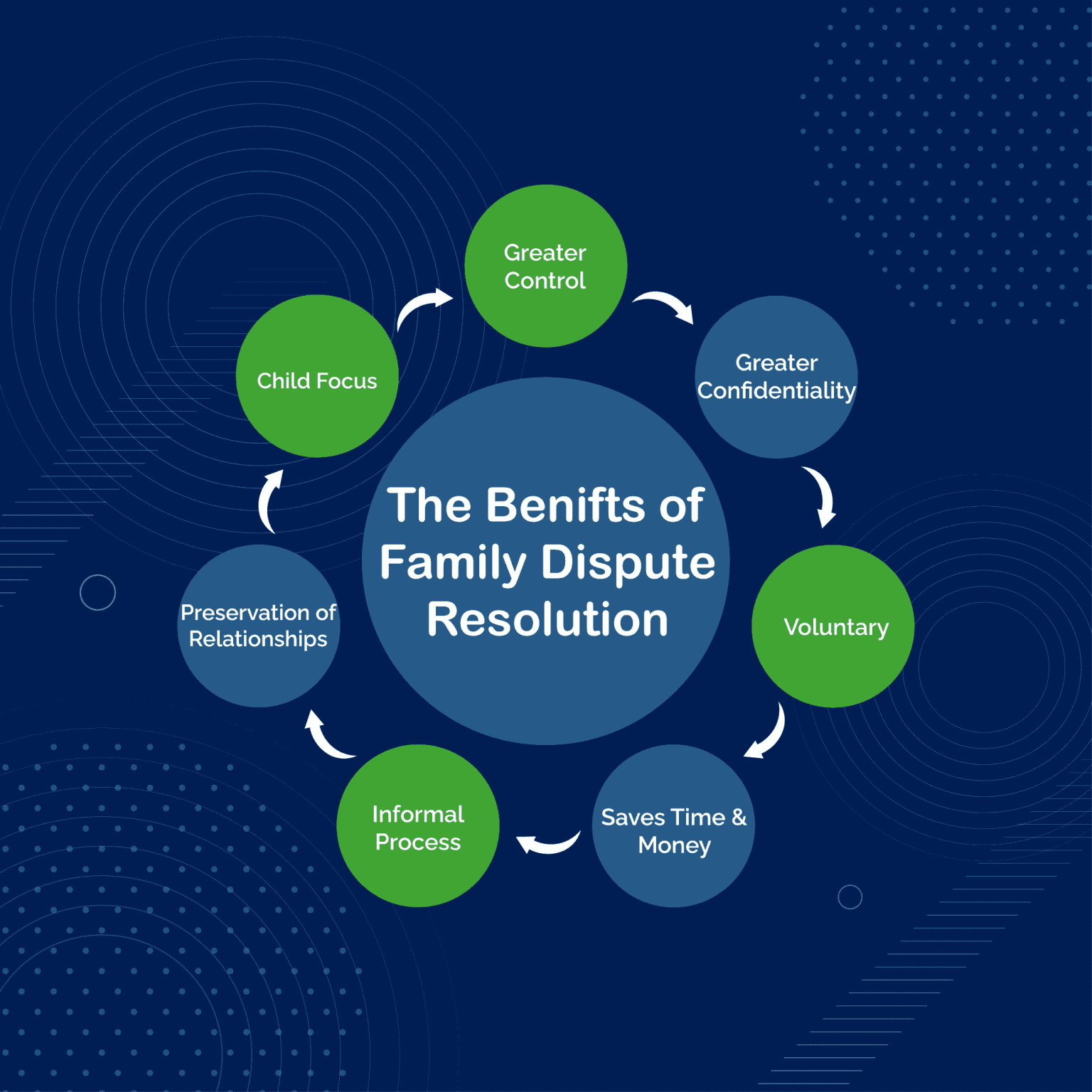
Family Dispute Resolution, or FDR as it is more commonly called, is a specialised form of mediation for separated families, dealing with children’s matters and/or financial matters. Your mediation is facilitated by an independent Family Dispute Resolution Practitioner (FDRP) in an impartial and non-judgemental manner.
Through FDR, families affected by separation are able to narrow their disputed issues, discuss and generate possible outcomes for their family, and ultimately reach agreements to move forward with. Because every family is unique and best placed to make decisions for their own family, the FDRP will guide your session/s but will not give legal advice or impose outcomes on the family.
Where deemed appropriate by your FDRP, and with the consent of both parents, your FDR process may include Child Inclusive Practice (CIP). An experienced Child Consultant will meet with your child/ren to discuss any concerns they might have about the separation. Our Child Consultants create a safe and comfortable environment, which most children find therapeutic.
With your child/ren’s consent, the Consultant may then share feedback with the parents, as well as make recommendations, within the FDR process. Your FDRP will then help you use this information in your decision-making.
At Ray’s Room, we believe in, and advocate for, collaborative practice between all relevant professionals. As the saying goes, “it takes a village to raise a child”, and in many cases it takes the support of several professionals to guide a family through separation.
That is why, where it helps, our FDRPs work alongside therapists, child consultants and solicitors so that families feel supported through the FDR process and reach the best outcomes. All of our practitioners are open to making and receiving cross-referrals, and have a network of trusted professionals if required.
We answer your questions about the family mediation process, costs and timing.
You complete an individual pre-mediation assessment session (up to 1.5 hours) with your allocated FDRP.
We contact the other party to take part in the FDR process. They then complete their own pre-mediation assessment.
We set a date and venue, and provide a formal Agreement to Mediate.
After signing the Agreement, you take part in family mediation to work towards agreement on the issues raised.
Once agreement is reached, we draft a written copy of your agreement for you.
Once you’ve made the choice to separate, working out what comes next can be bewildering and daunting. We invite you to reach out to us at Ray’s Room for help during this process. We can connect you with relevant services and help you identify the best approach for your circumstances. We also recommend that all clients seek their own legal advice at some stage.
If your former partner does not engage in the FDR process and you have children, our Family Dispute Resolution Practitioner may provide you with a Section 60I certificate. This certificate allows you to apply to the Court for parenting orders. If you are separating without children and your situation relates only to property or financial matters, we advise seeking legal advice if the other party chooses not to take part in FDR.
Your first appointment with your FDR Practitioner is called a pre-mediation assessment. This one-on-one session lasts up to 1.5 hours and assesses whether FDR is appropriate for your situation and likely to achieve the outcomes you want. Our practitioners are bound by the FDRP Regulations, which set out objective factors to consider when deciding whether mediation is suitable.
In some cases, the FDR Practitioner (mediator) and the other party can both agree to allow additional people, such as lawyers or support persons, to be present during mediation. Our practitioners are experienced in this hybrid form of FDR. It must be discussed, agreed to and arranged beforehand, so please speak with your FDR Practitioner if you would like to explore this option.
When you express interest in mediation, our practitioners carry out a screening process to assess your situation, your ex-partner and the level of safety involved. We can adapt our process so that everyone feels safe and heard, for example with shuttle mediation, where you don’t speak directly to, or see, your ex-partner. If mediation isn’t suitable or safe, we can issue a Section 60I certificate, and refer you to support services, including counselling and domestic violence support groups.
What you need to prepare will be explained in your pre-mediation session. It helps to think about what you would like to propose, e.g. children’s living arrangements, changeovers, holidays and financial percentage splits. For financial or property matters, your FDRP will give you a checklist to compile your assets, liabilities, valuations and related documents.
Once agreement is reached, even if only on some issues, we’ll draft the terms in a form that can be used for purposes such as a Parenting Plan, Consent Orders in the Family Court, or legal advice.
Support for children and teenagers facing anxiety, big feelings and change.
Learn moreWorking with the whole family to rebuild communication and ease conflict at home.
Learn moreEvidence-based therapy for adults working through anxiety, low mood and trauma.
Learn moreEFT, Gottman Method and Imago therapy for couples at any stage.
Learn moreWhether you have questions about the process or are ready to book your pre-mediation assessment, our team is here to help your family move forward.
Ask Rays Room
Here to point you in the right direction
Hi, I'm the Rays Room assistant. What can I help you with today?